

OPHTHALMIC EXAMINATION
Eye Examination
Using the Most Advanced Equipment!
A complete eye examination is more than just prescribing glasses or contact lenses

Comprehensive eye examination

Modern
diagnosics
equipments

Experienced
specialists
Health Month
March 30 – April 30
Sign up for one of our preventive packages!

The Importance of
Regular Eye Screening
Regular eye examinations give your eye doctor the opportunity to assess the general health of your eyes and refractive errors and help to detect eye problems early – when they are the most treatable. Vision loss usually develops gradually, over many years, and many people are unaware of how much worse their vision is than it could be. Many eye conditions do not cause immediate symptoms until visual impairment has set in. So a comprehensive and regular check-up is one of the best ways to preserve your vision.
Vision-threatening eye diseases may not be detected by a simple eye test. However, a comprehensive examination can help in the early detection of cataracts, glaucoma, macular degeneration, retinal disease, diabetes and high blood pressure. The results of the test can also detect a number of other diseases, such as diabetes and high blood pressure.
When should you have an eye test?
There are a number of factors that can determine how often you need an eye test, including your age, your health and your risk of developing eye problems.
- Children
It is important and necessary to participate in eye screenings from infancy, as these examinations can reveal not only nearsightedness and farsightedness but also other potential issues.
Recommended screening ages: at 6 months, 1 year, 3 years, around 5–6 years, and thereafter every 2 years.
We welcome even the youngest in our pediatric ophthalmology.
- Adults
The general recommendation is to have a screening every 2 years up to the age of 40, and every year after the age of 40. Your eye doctor may recommend a different frequency based on the results of the screening.
What kind of tests and instrumental eye measuring are performed during an eye screening?
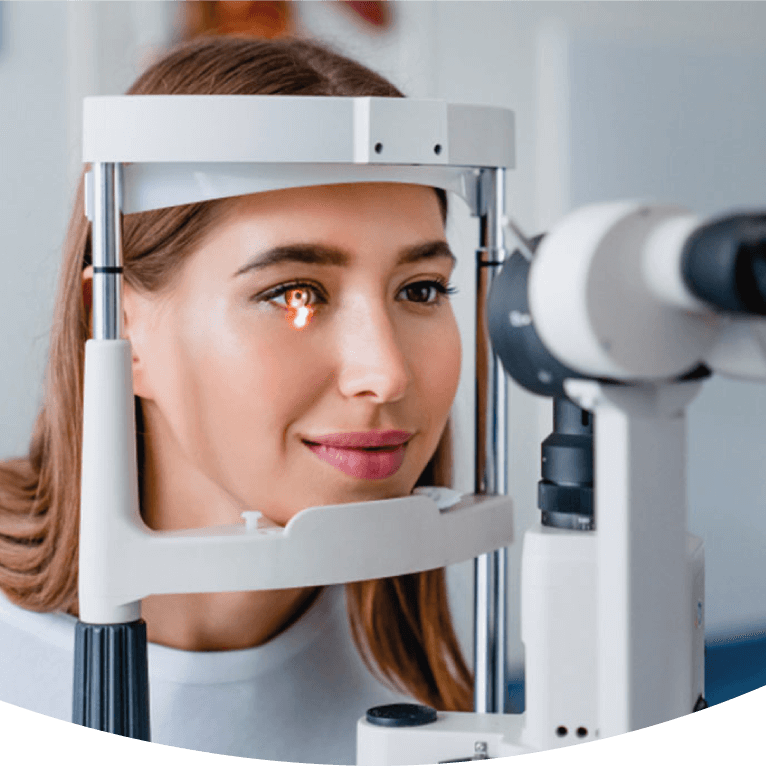
Our complex eye examination assesses many important aspects of your eye health. A comprehensive eye examination may include the following, depending on which tests your ophthalmologist deems appropriate to perform to assess the condition of your eyes:
- Visual acuity test
- Defining objective and subjective refractive errors at both far and near distance
- Corneal refractive testing
- Measuring intraocular pressure
- Pupil function test
- Pupil dilation
- Slit lamp test
- Fundus exsamination
Once the examination is complete, a therapeutic recommendation is made based on the diagnosis. If necessary, a follow-up appointment will be scheduled.
If vision correction becomes necessary, prescription glasses can be provided, or we will inform you about the surgical options for correcting refractive errors (myopia, hyperopia, astigmatism, presbyopia).
We also welcome patients for an ophthalmic examination in cases of acute or persistent eye inflammation, or skin lesions around the eyes.
We also carry out special tests
Early detection of changed eye condition such as cataracts, glaucoma and macular degeneration is an important step in maintaining eye health. If there are signs of a general medical problem, such as diabetes or high blood pressure, treatment is needed as soon as possible, as more serious eye problems can develop if left untreated.
If there is even the slightest doubt about a disease, we recommend further instrumental examination such as computerized visual field testing, OCT (optical coherence tomography) or OCT-A (optical coherence tomography angiography).
Our ophthalmology is also equipped to perform additional tests and treatments. We use the latest equipment and techniques to diagnose and treat diseases at an early stage.
Prices
Ophthalmologic examination
35.000 HUF
Protect your eye health, make an appointment for an eye examination.
Apply
"*" indicates required fields
Videos
Read more on this topic
Frequently asked questions
I can see clearly, why do I need an eye test?
A complete eye examination is more than just prescribing glasses or contact lenses, or updating dioptre values. An eye examination by an ophthalmologist consists of a series of tests designed to assess the overall health of your eyes. Your doctor will also check for eye diseases such as glaucoma, cataracts, diabetes, high blood pressure, retinal detachment, etc.
How long does an eye examination take?
The time taken for instrumental measurements and consultation varies from patient to patient. Be prepared for a stay of about 1.5-2 hours.
I am a diabetic. Do I need regular eye examinations?
Diabetes can cause serious vision problems. It is very important to have your eyes checked every year, preferably with dilating drops, so that the retina (the back of the eye) can be examined thoroughly.
How often should I have an eye test?
It depends on your age. It is very important that children are examined before starting kindergarten, as childhood vision disorders can cause not only immediate noticeable effects but also long-term problems.
For adults, eye screenings are recommended every 2 years up to the age of 40, and annually after 40.
In addition to routine eye examinations, an eye check-up is also recommended if:
You notice a loss of vision, even if it is only temporary
See floaters
Experiencing flashes of light
Blurred vision
Seeing colours as faded
A curtain or veil is created that blocks vision
The light is blinding, a halo appears
Had an eye injury
Experience double vision
Peripheral vision has deteriorated
You are diabetic
You have a family history of eye disease
How to prepare for a general eye examination?
Due to pupil dilation, your vision may be blurred for a few hours, or up to 24 hours depending on individual sensitivity, so driving is not recommended. Arrive by public transport or with an escort or driver.
Is it possible to cure amblyopia in adulthood?
Unfortunately, there is no cure for amblyopia. This is why it is important to have an eye screening in childhood. Wearing dioptric glasses and eye patch prescribed by a paediatric ophthalmologist can prevent cataracts.

